There they are, dreaming of that beamer. That Mercedes. That Ferrari. Trying to find the right price, still looking them up on the web.
A car buyer can compare models online, check a dealer’s reputation and arrive at the showroom with a shortlist already in mind.
For automotive businesses, search visibility needs to support the whole decision, from the initial question to an enquiry, test drive or service booking.
This Intellar Agency guide brings together original research relevant to Australia and New Zealand. It distinguishes vehicle buyers from general consumers, intentions from completed actions, and automotive findings from broader consumer research.
Key takeaways
The strongest findings connect research, trust and the next customer action. Each takeaway keeps its geography and research period visible.
- In Australia, online search featured in 58% of new-vehicle and 57% of used-vehicle research journeys in Nielsen’s findings. Search engines are the primary starting point for both markets, meaning dealerships must capture attention before buyers even step on a lot. (Nielsen, October, 2025)
- 35% of surveyed Australian car buyers planned to use, or already used, AI to find a car. Generative AI is actively reshaping how buyers discover vehicles, making AI search visibility a critical new channel for forward-thinking auto brands. (carsales, January, 2026)
- 18% of Australian vehicle owners surveyed used AI to compare service providers in 2026. Aftersales and servicing are increasingly driven by smart search queries, highlighting the need for mechanics to optimise their service offerings for AI platforms. (mycar, June, 2026)
- 55% of New Zealand online adults surveyed used AI in search engines during the year covered by the 2025 survey. AI integration in daily search habits is mainstream across New Zealand, meaning traditional keyword strategies must evolve to answer conversational queries. (InternetNZ, March, 2026)
- 75% of New Zealand buyers searched beyond their town or city, according to Trade Me’s 2025 report. Buyers are willing to travel for the right vehicle, so expanding local SEO targeting beyond immediate geographic boundaries is highly lucrative. (Trade Me, September, 2026)
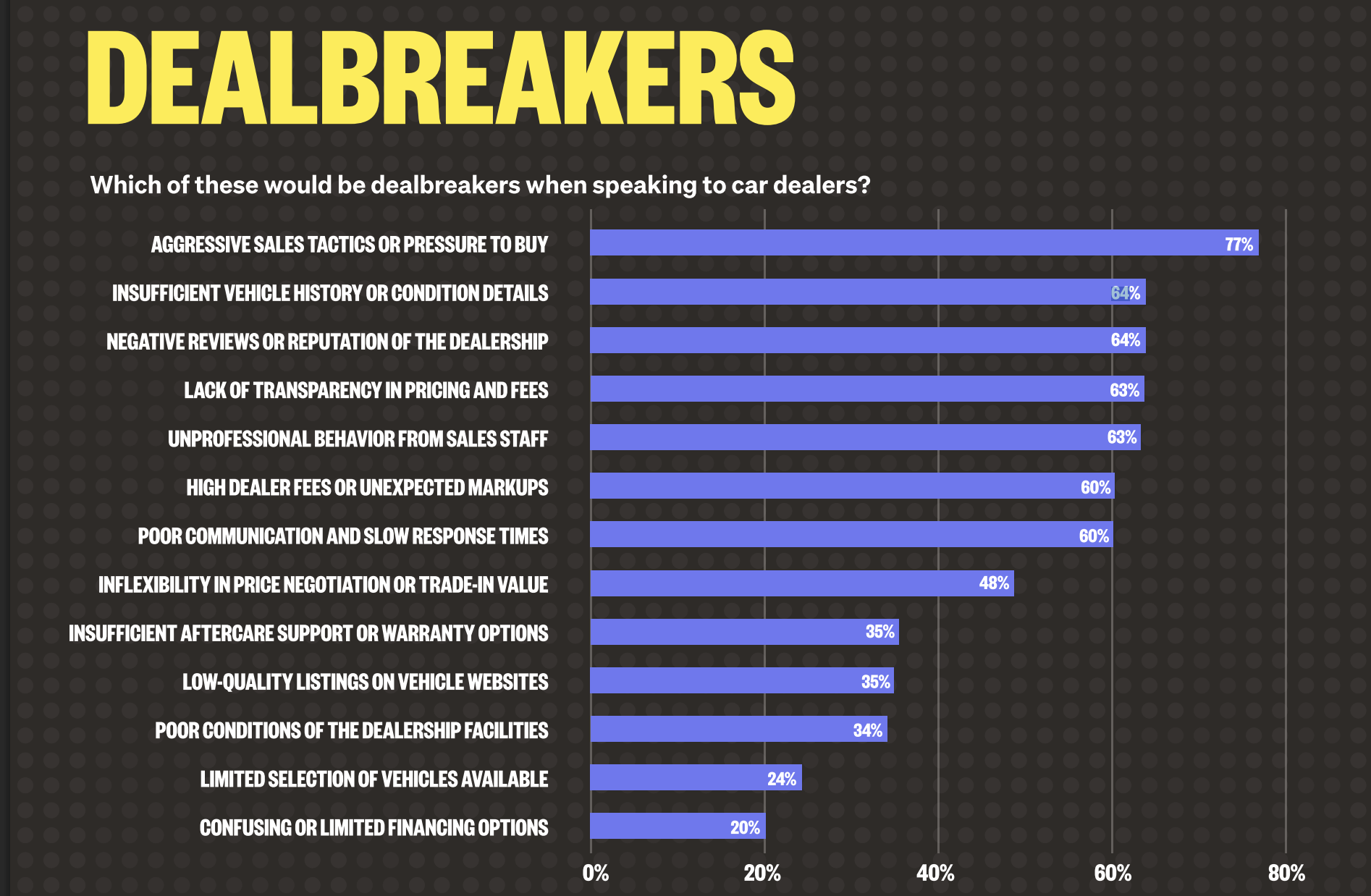
- 64% cited negative dealer reviews or reputation as a dealbreaker in Trade Me’s 2025 New Zealand report. Online reputation directly impacts bottom-line sales; a poor review profile will actively drive ready-to-buy customers to competitors. (Trade Me, September, 2026)
- 25% of Australian new-car buyers visited dealerships during early research, carsales’ 2026 report found. Physical showroom visits are happening earlier in the consideration phase, making seamless online-to-offline customer experiences essential. (carsales, August, 2026)
- 12% of Australian vehicle owners surveyed used AI to watch videos that helped them fix something themselves in 2026. DIY maintenance content powered by AI creates a unique brand-building opportunity for parts suppliers and service centres to earn trust through education. (mycar, June, 2026)
- AI Overviews appeared in 354 of 400 selected Australian automotive searches (88.5%) in Intellar’s September 2026 study. We tested model names, brand ranges, vehicle categories, buying requirements and comparisons. (Intellar, September 2026)
Table of contents
- Key takeaways
- Automotive search and SEO statistics
- AI search and automotive discovery
- Local SEO and dealership search statistics
- Reviews and automotive purchase decisions
- Video and automotive search behaviour
- Automotive search statistics in Australia and New Zealand
- What the statistics mean for automotive businesses
- Methodology and source notes
- We put the AI in automobiles
Automotive search and SEO statistics
Online research shapes what buyers need before they contact a dealership. These findings cover search, vehicle information and mobile access. The mobile findings distinguish access to an automotive platform from general internet use, rather than treating either as search-engine market share.
Online vehicle research
- Nielsen reported that 75% of Australian car buyers researched online before a new-car purchase. Digital touchpoints dominate the initial buying phase, emphasising that a weak website directly translates to lost showroom traffic. (Nielsen, October, 2025)
- In Trade Me’s 2025 New Zealand report, 64% named insufficient vehicle history or condition details as a dealbreaker. Transparency builds trust, and failing to provide comprehensive digital listings directly sabotages potential sales. (Trade Me, September, 2026)
Search engines and automotive discovery
- Online search featured in research for 58% of new-vehicle and 57% of used-vehicle buyers in Nielsen’s Australian findings. Both new and used vehicle markets rely heavily on search visibility, proving SEO is useful regardless of your inventory type. (Nielsen, October, 2025)
- 62% of surveyed New Zealand consumers who had used AI for shopping used it to research planned purchases. AI is becoming part of the consideration stage, as shoppers gather information before deciding what to buy. Useful product explanations can address the questions shaping those decisions. (PwC New Zealand, July, 2026)
- AI Overviews appeared for all 80 comparison searches (100%), compared with 42 of 80 model searches (52.5%) in Intellar’s test. Examples included “forester vs rav4” and “subaru forester”. Tracking model names alone would have missed a large part of the AI answers in this sample. (Intellar, September 2026)
- AI Overviews appeared for 95% of brand-range searches and 95% of vehicle-category searches in Intellar’s selected query groups (76 of 80 in each). Searches such as “subaru evs” and “hybrid suvs” sat in these groups. All 80 searches involving needs or constraints, such as “hybrid suv under 50000”, also returned an AI Overview. (Intellar, September 2026)
Mobile search behaviour
- 72% of carsales visitors accessed the site on mobile devices in its Australian April 2024 audience reporting. Mobile dominance in browsing means dealership sites must load instantly and offer flawless navigation on small screens to retain buyers. (carsales, May, 2024)
- 97% of Australian adults used a mobile phone to access the internet in the six months to June 2025. Practically the entire consumer base is online via mobile, making mobile-first indexing the baseline for any automotive digital strategy. (ACMA, February, 2026)
AI search and automotive discovery
AI is becoming part of product research and automotive service discovery.
The studies below measure different behaviours and populations, so their percentages should not be compared as a single adoption trend.
Planned use is identified separately from reported use.
AI search adoption
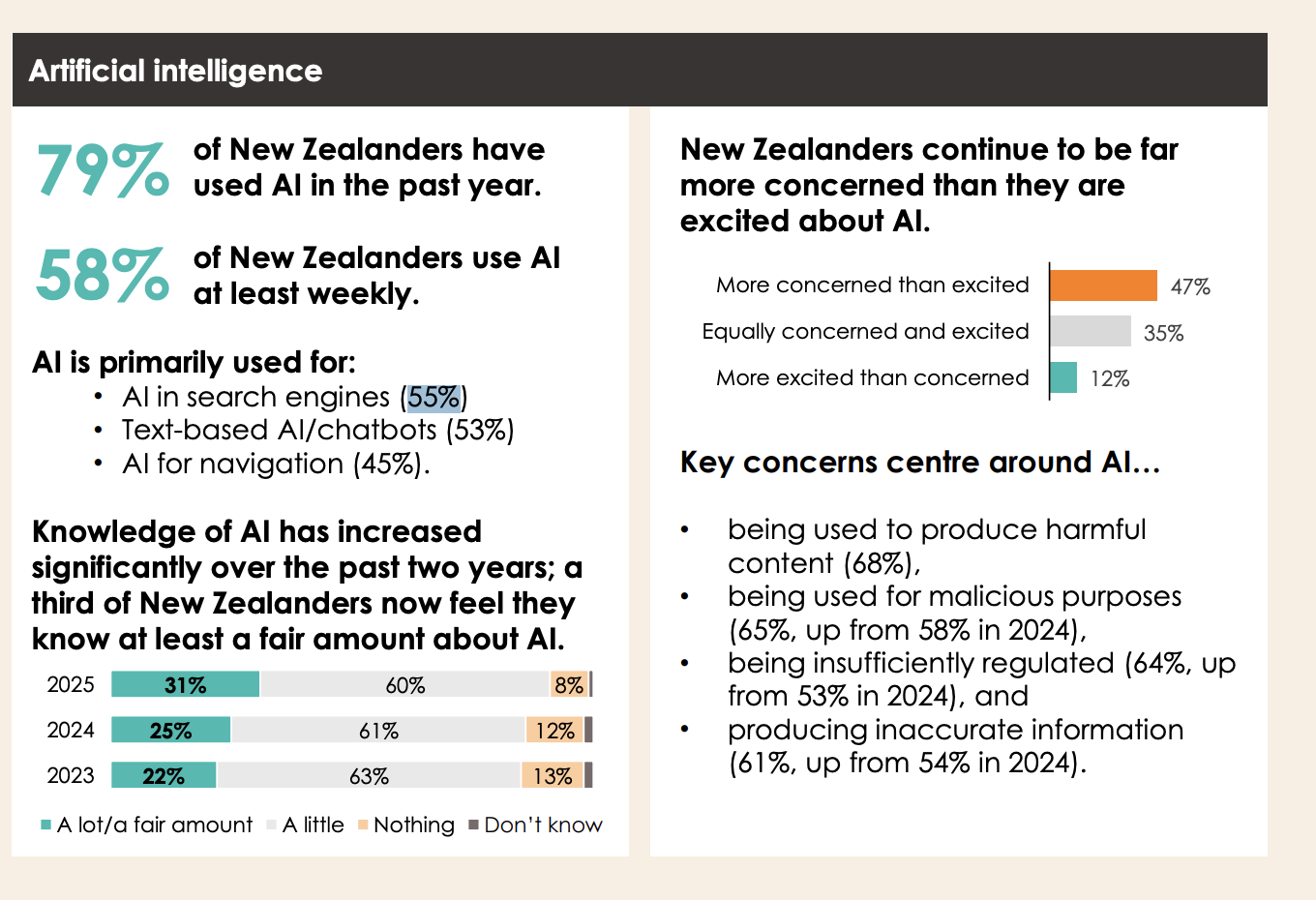
- 55% of New Zealand online adults surveyed used AI in search engines during the year covered by InternetNZ’s 2025 survey. With over half the population utilising AI search, creating content that directly answers natural language queries is essential for visibility. (InternetNZ, March, 2026)
- 35% of surveyed Australian car buyers planned to use, or already used, AI to help find a car. Early adoption of AI in the vehicle hunt highlights a massive opportunity for dealerships to capture tech-savvy buyers through AI optimisation. (carsales, January, 2026)
AI-assisted product and vehicle research
- 18% of Australian vehicle owners surveyed used AI to search for and compare service providers in 2026. Automotive service queries are shifting to AI, requiring mechanics and service centres to maintain crystal-clear business profiles and service menus. (mycar, June, 2026)
- 64% of surveyed New Zealand AI shoppers used AI to compare products and prices in May 2026. AI is actively being used as a comparison engine, meaning your vehicle pricing, specs, and unique selling points must be easily readable by machine learning models. (PwC, July, 2026)
- Google asked about budget in 24 of 40 initial AI Mode answers (60%) in Intellar’s automotive conversations. A broad search can quickly become a discussion about what someone can afford, making prices and differences between grades useful detail to cover. These were researcher-run conversations, not a survey of car buyers. (Intellar, September 2026)
Consumer trust in AI-generated answers
- In 2025, 61% of New Zealand online adults surveyed were very or extremely concerned about AI producing inaccurate information. Scepticism remains high, so brands that provide verifiable, authoritative automotive information will stand out and win buyer trust. (InternetNZ, March, 2026)
- 97% of New Zealand AI shoppers surveyed reported at least some trust in AI recommendations in May 2026. Once consumers adopt AI for shopping, their reliance on its suggestions is nearly universal, underscoring the importance of being recommended by these systems. (PwC, July, 2026)
Local SEO and dealership search statistics
Local discovery connects useful information with a business a customer can contact or visit. Australian servicing and dealership surveys, alongside New Zealand buyer research, show different parts of that process. These findings do not establish a national conversion rate from Maps, calls or directions to dealership visits.
Local and near-me automotive searches
- 35% of surveyed Australians who used professional vehicle servicing chose their provider for location and convenience in 2024. Convenience influences workshop choice alongside the service itself. Clear location, opening-hour and booking information helps customers judge how easily a provider fits into their day. (Australian Automotive Aftermarket Association, July, 2024)
- Trade Me’s 2025 report found 75% of New Zealand buyers searched beyond their local town or city. Restricting local SEO to a single suburb leaves money on the table; dealerships need regional content strategies to capture wider catchments. (Trade Me, September, 2026)
- AI Overviews appeared in 63 of 300 local automotive search checks (21.0%) in Intellar’s study. We checked searches for mechanics, car servicing and repairs across 50 locations in Sydney, Melbourne, Brisbane, Adelaide and Perth. (Intellar, September 2026)
- Near-me searches returned AI Overviews in 37 of 150 checks (24.7%), compared with 26 of 150 named-suburb checks (17.3%). Examples included “car service near me” and “car service salisbury adelaide”. The same near-me searches were repeated across locations, so these figures count search checks, not unique keywords. (Intellar, September 2026)
Maps and dealership discovery
- 65% of Australian buyers surveyed by carsales intended to buy through a dealership in July 2025. Dealerships remain a central destination in the buying journey. Making stock, location and contact information easy to find helps interested buyers take the next step. (carsales, September, 2025)
- 45% of New Zealand online adults surveyed reported using AI for navigation in InternetNZ’s 2025 survey. Smart navigation tools are changing how people find physical locations, making accurate map pin placements and local directory citations vital. (InternetNZ, March, 2026)
- Google map packs appeared in 299 of 300 local automotive search checks (99.7%). In 62 checks, a map pack and an AI Overview appeared together. For the mechanics and service businesses in this sample, Maps remained a prominent part of the results alongside Google’s AI answers. (Intellar, September 2026)
Calls, directions and dealership visits
- 25% of Australian new-car buyers visited a dealership during early research, according to carsales’ 2026 report. Because buyers walk into showrooms earlier, digital strategies must seamlessly blend with physical sales processes to nurture these initial touchpoints. (carsales, August, 2026)
- In Trade Me’s 2025 New Zealand report, 21% contacted only one dealer during their last car purchase. A significant portion of buyers lock in on their first choice, highlighting the massive advantage of ranking first and making an impeccable digital first impression. (Trade Me, September, 2026)
Reviews and automotive purchase decisions
Reputation can influence whether a buyer keeps a dealership on the shortlist. The automotive findings below sit alongside broader New Zealand consumer research, clearly identified as such. The government figures are historical benchmarks, instead of current dealer-specific review rates.
Online reviews and dealer choice
- 64% named negative dealer reviews or reputation as a dealbreaker in Trade Me’s 2025 New Zealand report. Your online reputation is your strongest conversion factor; ignoring customer feedback will actively cost you vehicle sales. (Trade Me, September, 2026)
- In 2024, 63% of New Zealand consumers usually sought extra information to check purchase claims. Buyers verify what you tell them, meaning honesty and detailed supplemental content on your website are key to passing their internal vetting process. (MBIE and Commerce Commission, July, 2024)
Ratings and consumer trust
- In 2024, 55% of New Zealand consumers usually looked for endorsements, including star ratings, energy ratings or trusted-brand awards. Visual trust signals like aggregated star ratings directly influence buying behaviour, so displaying them prominently on inventory pages boosts conversions. (MBIE and Commerce Commission, July, 2024)
- Nielsen reported 71% of Australians ranked proven reputation as their leading reason to buy a vehicle. Brand equity and local reputation outweigh almost every other factor, proving that investing in customer satisfaction is the ultimate marketing strategy. (Nielsen, October, 2025)
- The median review count on mechanic map listings was 114 in Brisbane, 107 in Adelaide and 181.5 in Melbourne. Intellar counted 30 listing appearances in Brisbane, 27 in Adelaide and 30 in Melbourne. These figures describe the mechanic listings we found; they aren’t review targets or proof of what made a business rank. (Intellar, September 2026)
Video and automotive search behaviour
Video can support learning and help brands earn attention. Recent Australian evidence covers vehicle-maintenance learning and broader topic research.
Video during vehicle research
- 12% of Australian vehicle owners surveyed used AI to watch instructional videos that helped them fix something themselves in 2026. Educational video content bridges the gap between AI search and consumer empowerment, creating a golden opportunity for aftermarket brands. (mycar, June, 2026)
- Australian viewers were 2.5 times as likely to choose YouTube to understand a topic deeply, compared with other video platforms, in 2024 research. When auto consumers want detailed walkthroughs or long-form reviews, they go to YouTube, making it the premier platform for in-depth vehicle content. (Google, September, 2024)
- YouTube was cited in 71 of 116 saved AI Mode answers (61.2%) and 34 of 116 AI Overviews (29.3%) for matched automotive questions in Intellar’s analysis of Ahrefs Brand Radar. Video was part of the source mix in both sets. The answers were archived on different dates, so this wasn’t a simultaneous comparison. (Intellar analysis of Ahrefs Brand Radar, September 2026)
Automotive search statistics in Australia and New Zealand
Country-level findings need their own context. The Australian and New Zealand evidence below should inform local content and measurement choices without being treated as directly comparable. The final subsection provides a clearly separated international context.
Australia
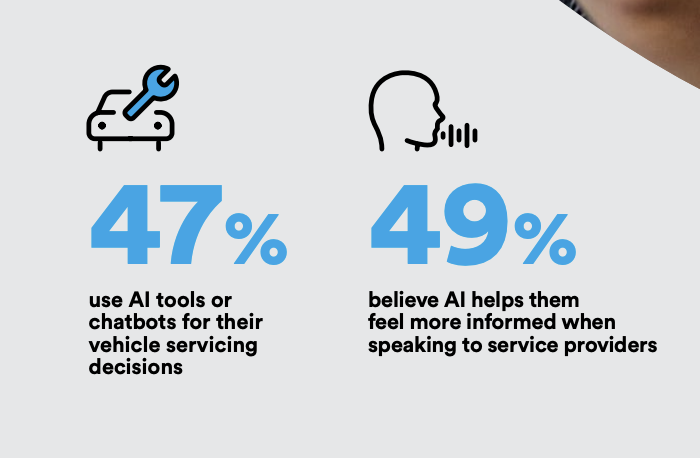
- 47% of Australian vehicle owners surveyed said AI tools or chatbots helped their servicing decisions in 2026. Interactive AI tools are actively driving service bookings, making integrated website chatbots a highly effective conversion tool. (mycar, June, 2026).
- More than 70% of AI-using Australian car buyers in carsales’ survey preferred ChatGPT. ChatGPT is a prominent research touchpoint for buyers using AI. Model comparisons and answers to ownership questions can help automotive businesses address the information these shoppers seek. (carsales, January, 2026)
New Zealand
- 53% of New Zealand online adults surveyed used text-based AI or chatbots during the year covered by the 2025 survey. The rapid normalisation of chatbot interactions means consumers now expect instant, conversational answers from automotive business websites. (InternetNZ, March, 2026)
- 44% of surveyed New Zealand AI shoppers said AI reduced their search-engine use for purchase research in May 2026. AI is actively cannibalising traditional search volume, requiring dealerships to optimise for large language models to reach these pivoting buyers. (PwC, July, 2026)
Global benchmarks
- 25% of consumers in Capgemini’s pooled international survey had used generative-AI shopping tools by October 2025. The global shift toward AI-assisted commerce indicates that specialised automotive shopping assistants will soon become a baseline consumer expectation. (Capgemini, January, 2026)
- In Pew’s 2025 US browsing study, traditional search-result links received clicks on 8% of visits with AI summaries, versus 15% without. AI summaries significantly depress traditional click-through rates, forcing SEOs to aim for inclusion within the AI snippet itself to maintain traffic. (Pew Research Center, July, 2025)
What the statistics mean for automotive businesses
Make the research journey easier to complete. The evidence supports useful information, credible business details and responsive enquiry handling as practical priorities. It does not justify a universal forecast for traffic, leads or showroom visits.
For SEO, build vehicle and service pages that answer the questions a customer needs resolved: suitability, condition, availability, pricing and what happens next. Make the information easy to use on a phone and keep sold stock and outdated offers under control.
For AI visibility, make important facts clear, consistent and attributable across your website and business profiles. Track how relevant questions surface your business, then check whether those visits lead to qualified enquiries. Intellar’s AI SEO services connect that work with wider search performance.
For local search, maintain accurate business details, helpful location pages, genuine customer reviews and straightforward contact options. A dealership selling across regions may need broader inventory visibility, while a workshop may depend more on nearby customers. Local SEO should reflect that difference.
For dealership visits, measure the steps you can actually observe: enquiry source, response, appointment and attendance. Add consistent campaign tagging and customer-source questions where useful. Do not count a direction request as a confirmed visit.
Intellar’s AI SEO services connect that work with wider search performance.
For local search, maintain accurate business details, helpful location pages, genuine customer reviews and straightforward contact options. A dealership selling across regions may need broader inventory visibility, while a workshop may depend more on nearby customers. Local SEO should reflect that difference.
For dealership visits, measure the steps you can actually observe: enquiry source, response, appointment and attendance. Add consistent campaign tagging and customer-source questions where useful. Do not count a direction request as a confirmed visit.
Methodology and source notes
Scope and sourcing. This September update uses sources published from 2023 to 2026, including original reports, first-party survey releases and original observational studies. Australian and New Zealand findings are used throughout, with international data restricted to the explicitly labelled global subsection. General consumer findings are not presented as automotive-specific results.
Citation dates. Parenthetical links normally show the source organisation and publication month and year; the claim identifies the data period when it differs. Trade Me’s report supplies its year but no publication month, so its citation uses this page’s September verification date. That date does not imply new fieldwork or a new edition.
Samples and definitions. Online panels, marketplace users and existing AI shoppers are different populations. InternetNZ represents online adults; PwC screened for prior AI shopping use. “Usually” in the government consumer findings combines “always” and “most of the time”. Survey responses describe what people reported, rather than independently observed purchases.
Local evidence limits. The automotive findings cover service-provider choice and dealership purchase intentions. The navigation finding is broader consumer context. These measures do not establish map-pack ranking factors or dealership visits attributable to Maps. The Australian Automotive Aftermarket Association’s location finding comes from its 2024 consumer survey of Australians aged 18–75 using professional vehicle servicing. Its citation uses the report’s July release month; the linked PDF was uploaded in September.
Intellar’s vehicle search study. We tested 400 selected queries in September 2026, with 80 in each of five groups. Results used Australian desktop settings, English and a requested Sydney location. An AI Overview counted wherever it appeared on the page. The sample wasn’t weighted by search volume and doesn’t estimate coverage across all Australian automotive searches. Intellar’s percentages were calculated from the saved observations.
Intellar’s local search study. We completed 300 checks across 50 requested locations, using three automotive services and both near-me and named-suburb wording. Two initial technical failures were completed later in September; their matching near-me searches were not rerun. Review medians came from up to three listings not marked as ads in each result, with ten mechanic searches per city. Counting each identifiable business once gave the same medians: 28 businesses in Brisbane, 27 in Adelaide and 30 in Melbourne. These results describe the selected searches, not national ranking thresholds.
Intellar’s AI Mode and Brand Radar analysis. The 40 AI Mode conversations were researcher-run in signed-in Chrome, with personalisation uncontrolled. The budget figure counts questions in the initial answers, not buyer behaviour. The Brand Radar comparison used 116 matched automotive questions, with each domain counted once per answer. Archived answer dates differed between products; citation presence doesn’t measure clicks or establish a causal difference between them.
Research dates and access limits. Findings retain their original data periods; pre-2023 sources have been removed. A newer government consumer-survey edition is listed publicly, but its detailed findings could not be verified during this review; the earlier wave is included only as a historical benchmark. A newer Trade Me report requires a form and is not used here.
Interpretation and counting. A distinct survey measure or reported comparison counts as a finding. Repeated takeaways are not additional findings. No percentages were estimated, pooled across incompatible surveys or calculated from charts. Confidence, intentions, traffic, search appearances and visits remain separate measures. Campaign cases are not market averages, and mixed-media results are not attributed to video alone.
Future updates. Review original reports and links quarterly, and replace historical benchmarks when comparable local research becomes available. Recheck search-result snapshots before using them to set targets, because their composition can change.
Sources
- Trends and developments in telecommunications 2024–25 (February 2026)
- What Matters to the Consumer 2026 (January 2026)
- carsales leads the way with unmatched reach and trust (May 2024)
- More buyers turn to AI when searching for next car (January 2026)
- The hidden moments shaping the new car buying journey (August 2026)
- State of the Industry 2024: location and convenience
- Dealership Experience Survey: July 2025 findings
- YouTube Brandcast Sydney 2024 Brand Insights (September 2024)
- New Zealand’s Internet Insights 2025 Survey Findings (March 2026)
- NZ Consumer Survey 2024 (July 2024)
- mycar Mobility Index 2026 (June 2026)
- Nielsen data shows Aussies are set to swap utes for EVs (October 2025)
- Google users are less likely to click on links when an AI summary appears (July 2025)
- The AI-powered consumer: How shopping behaviour is changing in NZ (July 2026)
- Motors Consumer Insights Report 2025 (September 2026)
- Intellar — Australian automotive AI search study (September 2026).
We put the AI in automobiles
Turn search visibility into enquiries your team can act on. Intellar’s automotive SEO services help automotive businesses improve how customers find and evaluate them. Start with the vehicle, service and location pages that matter to your business, then connect SEO, AI visibility and local search to measurable enquiries and bookings.